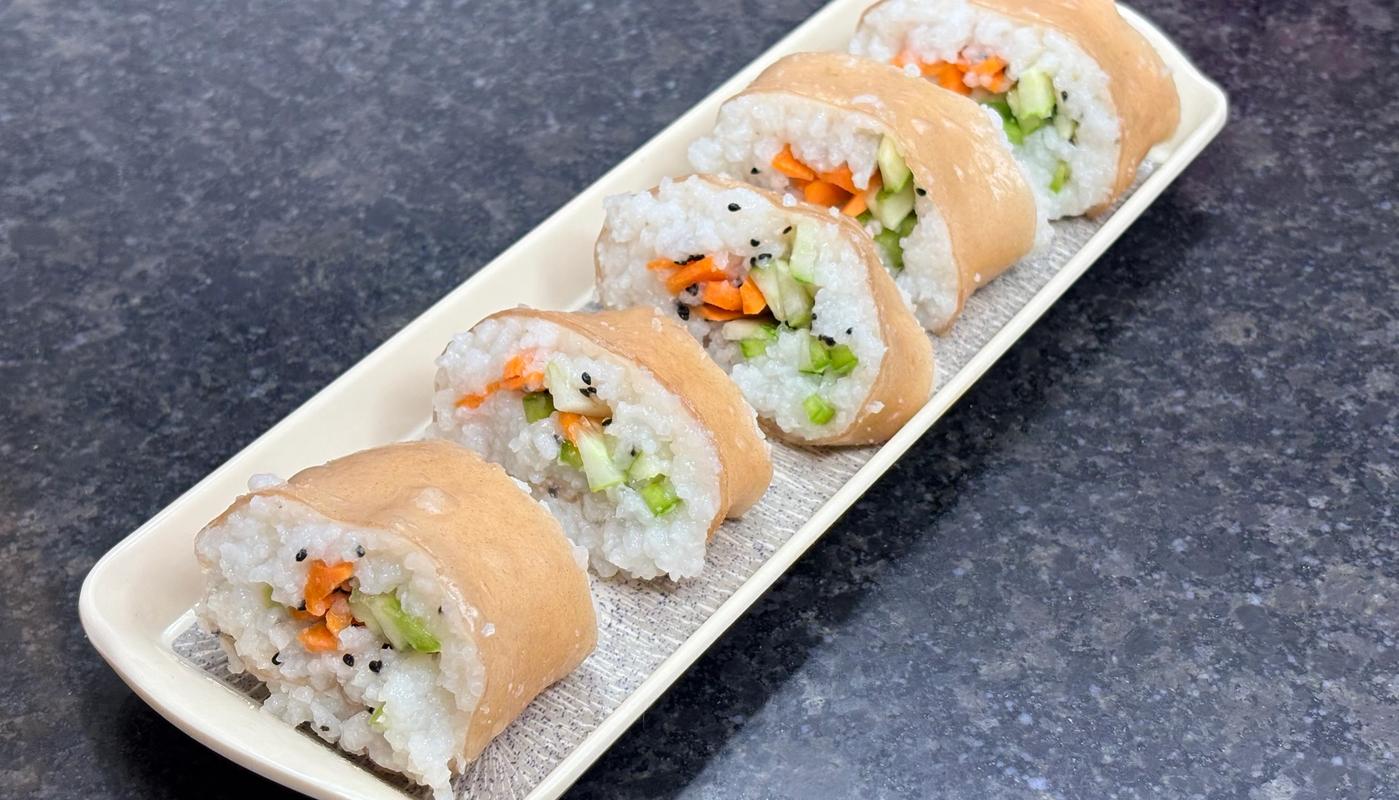
Veg Sushi Rolls
Veg Sushi Rolls are a light, colorful and delicious Japanese dish made with seasoned sushi rice, nori sheets and fresh vegetables. This homemade sushi can be prepared with simple ingredients and is perfect for a vibrant lunch, dinner or as an elegant party snack.
smart_display Watch the Recipe
About the Recipe
Sushi is a globally beloved Japanese preparation where seasoned rice is rolled with seaweed (nori) and various fresh fillings. Making vegetable sushi at home allows you to fully customize your rolls using your favorite crisp vegetables and sauces. It brings the elegance of Japanese cuisine right into your kitchen and makes for a fun, interactive cooking experience that the whole family can enjoy together.
photo_camera Step-by-Step Gallery



restaurant Instructions
- 1
Wash the sushi rice 3–4 times with cold water until the water runs clear.
- 2
Cook the rice with the measured water. Once cooked, let the rice rest covered for 10 minutes.
- 3
In a small bowl, mix the rice vinegar, sugar, and salt. Stir gently until the sugar is completely dissolved.
- 4
Transfer the cooked rice to a wide bowl. Evenly pour the vinegar mixture over the rice and gently fold it in. Do not mash or aggressively stir the rice.
- 5
Place a bamboo sushi mat on a flat surface and lay a nori sheet on top of it.
- 6
Using wet hands, spread a thin, even layer of sushi rice over the nori, leaving about a 1–2 cm empty space at the top edge.
- 7
Arrange the cucumber, carrot, avocado, and (optional) cream cheese strips horizontally across the center of the rice.
- 8
Using the sushi mat, start folding the nori over the filling to create a tight roll. Gently press the roll to ensure it holds its shape.
- 9
Lightly wet a sharp knife and carefully slice the sushi roll into equal-sized pieces.
- 10
Arrange the sushi pieces on a plate and serve immediately with soy sauce, pickled ginger, and wasabi.
science Why This Works — The Food Science
Seasoning the sushi rice with a blend of vinegar, sugar, and salt develops its characteristic sweet-tangy flavor profile while acting as a natural preservative. Gently folding the rice is critical—vigorous stirring will break the grains and release excess starch, making the texture gummy rather than pleasantly sticky. The nori sheet provides structural integrity, while the fresh raw vegetables offer a contrasting crunchy texture and high moisture against the dense rice.
eco Phytochemical Note
Nori (seaweed) is rich in marine phytochemicals and uniquely high in natural iodine. Because the vegetable fillings in this dish are served completely raw, heat-sensitive antioxidants and vitamins (like Vitamin C in the avocado and cucumber) remain fully intact and highly bioavailable.
energy_savings_leaf Botanical Ingredient Spotlight
Cucumber (Cucumis sativus)
Cucumber is a refreshing botanical ingredient that provides a necessary crisp texture and hydrating crunch to perfectly balance the sticky, dense sushi rice.
lightbulb Tips & Tricks
- check_circleDo not overcook the sushi rice; it should be sticky but still hold its individual grain shape.
- check_circleWashing the rice thoroughly is mandatory to remove excess surface starch.
- check_circleKeep your hands slightly wet when spreading the rice on the nori so it doesn't stick to your fingers.
- check_circleDo not overfill the roll with vegetables, or the nori will not close properly.
- check_circleAlways use a very sharp knife to cut the rolls, and wipe/wet the blade clean every 1–2 cuts for the cleanest slices.
- check_circleRoll the sushi firmly to keep the ingredients intact, but not so tight that the filling squeezes out the sides.
swap_horiz Substitutions
Maintains a similar sticky texture compared to long-grain rice like basmati.
Adds a similar creamy texture if avocados are unavailable.
Adds a different, slightly sweeter crunch.
Use to make the recipe completely gluten-free.
Use to make the recipe 100% vegan.
kitchen Storage & Serving
ac_unit Storage
Fresh sushi is best served immediately after making. If you must store it, place it in an airtight container in the refrigerator. Consume on the same day for the best texture and freshness. Do not freeze prepared sushi rolls. Freezing completely ruins the texture of both the seasoned rice and the fresh raw vegetables.
local_fire_department Reheating
Do not reheat sushi. Serve chilled or at room temperature directly from the refrigerator.
restaurant Serving
Serve traditional style with a small dipping bowl of soy sauce, a dab of wasabi and pickled ginger to cleanse the palate between bites. Recommended side dishes: Edamame, Miso soup or a Japanese-style cucumber salad.
calendar_month Meal Prep
The sushi rice can be prepared in advance and the vegetables can be julienned and stored in airtight containers in the fridge. However, the rolls themselves should only be assembled just before serving to prevent the nori from becoming soggy.
help_outline Frequently Asked Questions
Can I make sushi ahead of time?expand_more
Can I use normal rice instead of sushi rice?expand_more
Can I make this sushi vegan?expand_more
How can I make it less spicy?expand_more

Dr. Priyanka Singh, PhD energy_savings_leaf
Plant Biologist, Phytochemist & Botanical Kitchen Founder. Dr. Priyanka bridges rigorous academic science and your dinner table — one recipe at a time.
Meet Dr. Priyanka →