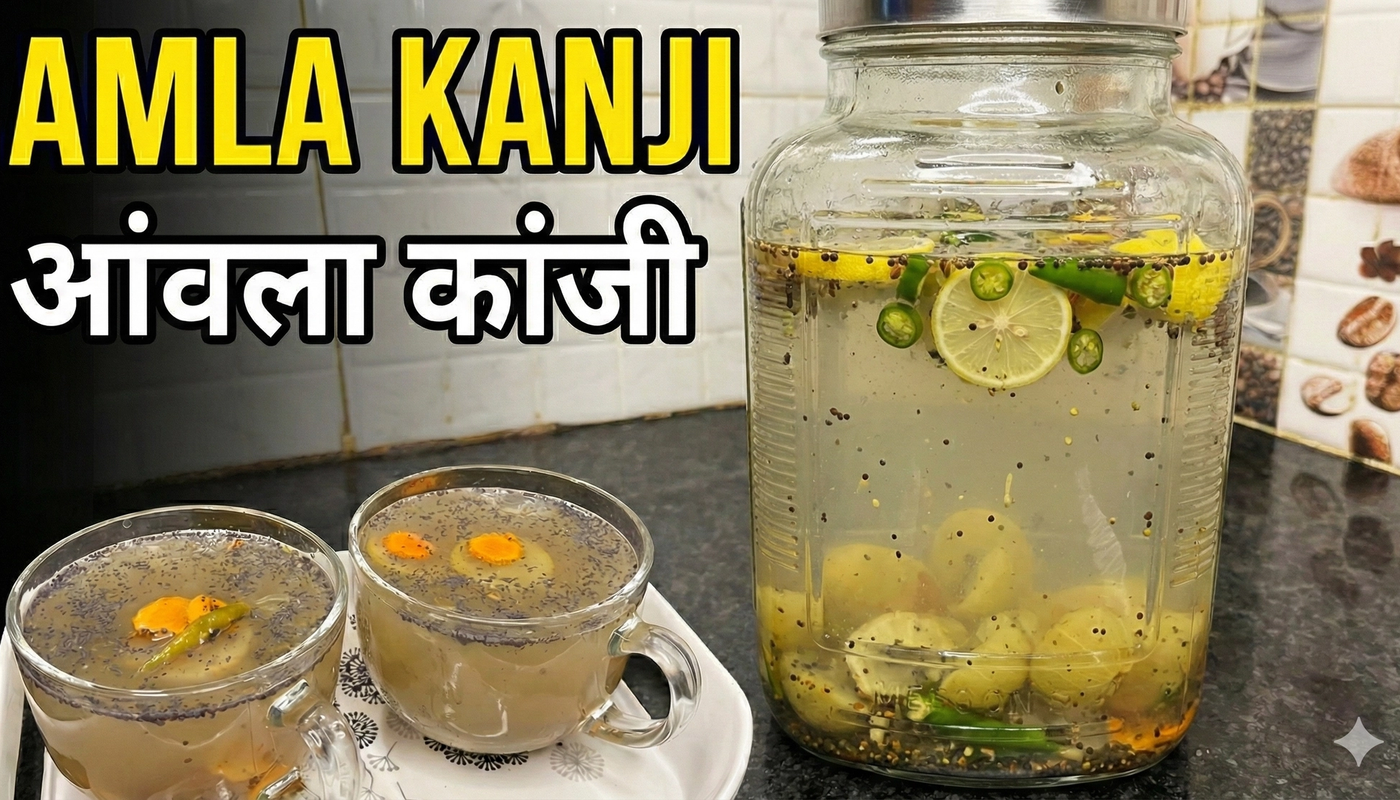
Amla Kanji
Amla Kanji is a traditional Indian fermented drink made with fresh Indian gooseberries, mustard powder, and aromatic spices. Its tangy, spicy, and slightly sour flavor deepens during fermentation, making it a perfectly pungent and refreshing gut-health booster.
smart_display Watch the Recipe
The Winter Tradition of Indian Fermentation
Kanji is one of North India’s most cherished traditional fermented beverages, usually prepared during the winter and festive seasons. At Dr. Priyanka's Kitchen, we celebrate the old-world method of naturally fermenting amla with mustard and spices to develop a distinctive tangy, pungent flavor. It is a nostalgic drink that warms the body and aids digestion.
photo_camera Step-by-Step Gallery
restaurant Instructions
- 1
Prepare Amla: Wash the fresh amla under running water. Boil sufficient water in a saucepan, add the amla, and blanch for approximately 5–7 minutes until slightly tender. Do not overcook them.
- 2
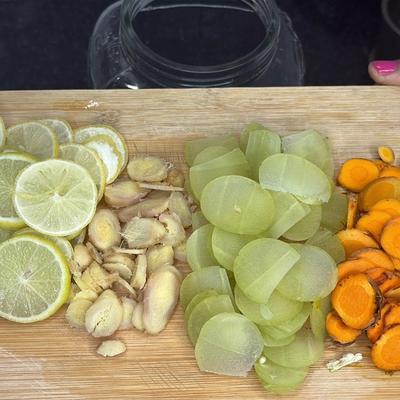
Chop Ingredients: Clean and slice the blanched amla, carrot, ginger, and lemon into thin pieces. Place the sliced ingredients in a clean bowl.
- 3
Prepare Mustard Mixture: Coarsely grind the yellow mustard seeds. In a small bowl, mix the ground mustard, crushed black mustard seeds, red chilli powder, turmeric powder, black salt, regular salt, hing, and roasted cumin powder.
- 4
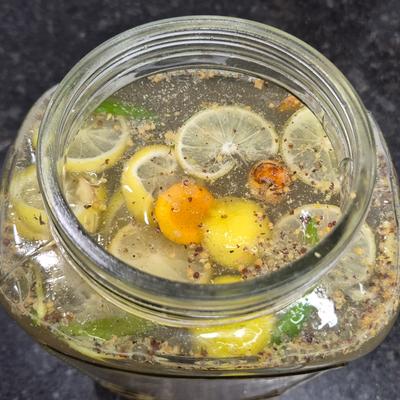
Make Kanji Base: Pour the 1 litre of boiled-and-cooled water into a perfectly clean, sterilized glass jar. Add the prepared spice mixture to the water and stir thoroughly.
- 5
Add the sliced amla, carrot, ginger, and lemon pieces to the glass jar. Use a clean spoon to gently mix so the spices distribute evenly.
- 6
Ferment: Cover the mouth of the jar with a clean muslin cloth (or a very loosely fitted lid) so gases can escape during fermentation. Place the jar at room temperature away from direct sunlight for 2–4 days.
- 7
Daily Care: Gently stir the kanji once every day using a completely clean, dry spoon. The exact fermentation time will vary based on your room temperature.
- 8
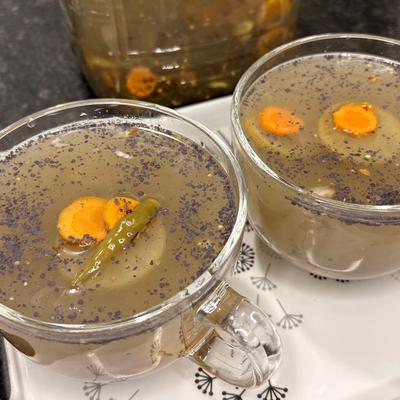
Once the kanji develops a pleasantly tangy, fermented flavor and a strong mustard aroma, the fermentation is complete. Transfer the jar to the refrigerator to halt fermentation. Serve chilled.
science Why This Works — The Food Science
During fermentation, naturally present wild microorganisms metabolize the available sugars in the carrots and amla, developing lactic acid which gives the drink its characteristic sour flavor and acts as a natural preservative. The mustard seeds provide a pungent aroma and complex flavor profile. Fermentation temperature and duration directly affect the final taste; warmer room conditions will result in faster fermentation.
eco Phytochemical Note
Fermentation increases the bioavailability of certain nutrients while acting as a natural probiotic. However, ensure you use a perfectly clean glass jar and utensils to prevent any unwanted mold or foul bacteria from ruining the batch.
energy_savings_leaf Botanical Ingredient Spotlight
Amla (Indian Gooseberry - Phyllanthus emblica)
Amla is naturally incredibly sour and high in Vitamin C. When balanced with the pungent mustard and earthy spices during fermentation, it provides the primary tangy flavor profile that defines traditional kanji.
lightbulb Tips & Tricks
- check_circleAlways use a clean glass or ceramic jar for fermentation; never use plastic or metal.
- check_circleEnsure the boiled water is completely cooled before adding ingredients, otherwise, you will kill the natural bacteria needed for fermentation.
- check_circleDo not grind the mustard seeds into a fine paste; a coarse grind is essential for the correct texture and flavor release.
- check_circleKeep the jar away from direct sunlight while fermenting.
swap_horiz Substitutions
Flavor profile will change
Will have a sharper, more pungent bite
kitchen Storage & Serving
ac_unit Storage
Once fermentation is complete, store the Amla Kanji in the refrigerator to stop the fermentation process. Always use a clean, dry spoon when serving. Do not consume if you notice any unusual mold, foul smell, or abnormal coloration.
local_fire_department Reheating
Do not reheat. Kanji is a living fermented food and must be served chilled or at room temperature.
restaurant Serving
Serve chilled or lightly cooled in a glass. It pairs beautifully with a heavy Indian lunch, festive meals, khichdi, or hot parathas. Gently stir the jar before serving to redistribute the settled spices.
calendar_month Meal Prep
The amla can be blanched and the spice mix prepared a day in advance. However, you must use completely fresh ingredients and a sterile jar on the day you assemble the kanji for fermentation.
help_outline Frequently Asked Questions
How many days should I ferment Amla Kanji?expand_more
Can I reduce the amount of mustard powder?expand_more
Can I ferment Amla Kanji in the refrigerator?expand_more
Do I need to stir the kanji daily?expand_more
What should I do if the kanji has an unusual smell?expand_more

Dr. Priyanka Singh, PhD energy_savings_leaf
Plant Biologist, Phytochemist & Botanical Kitchen Founder. Dr. Priyanka bridges rigorous academic science and your dinner table — one recipe at a time.
Meet Dr. Priyanka →